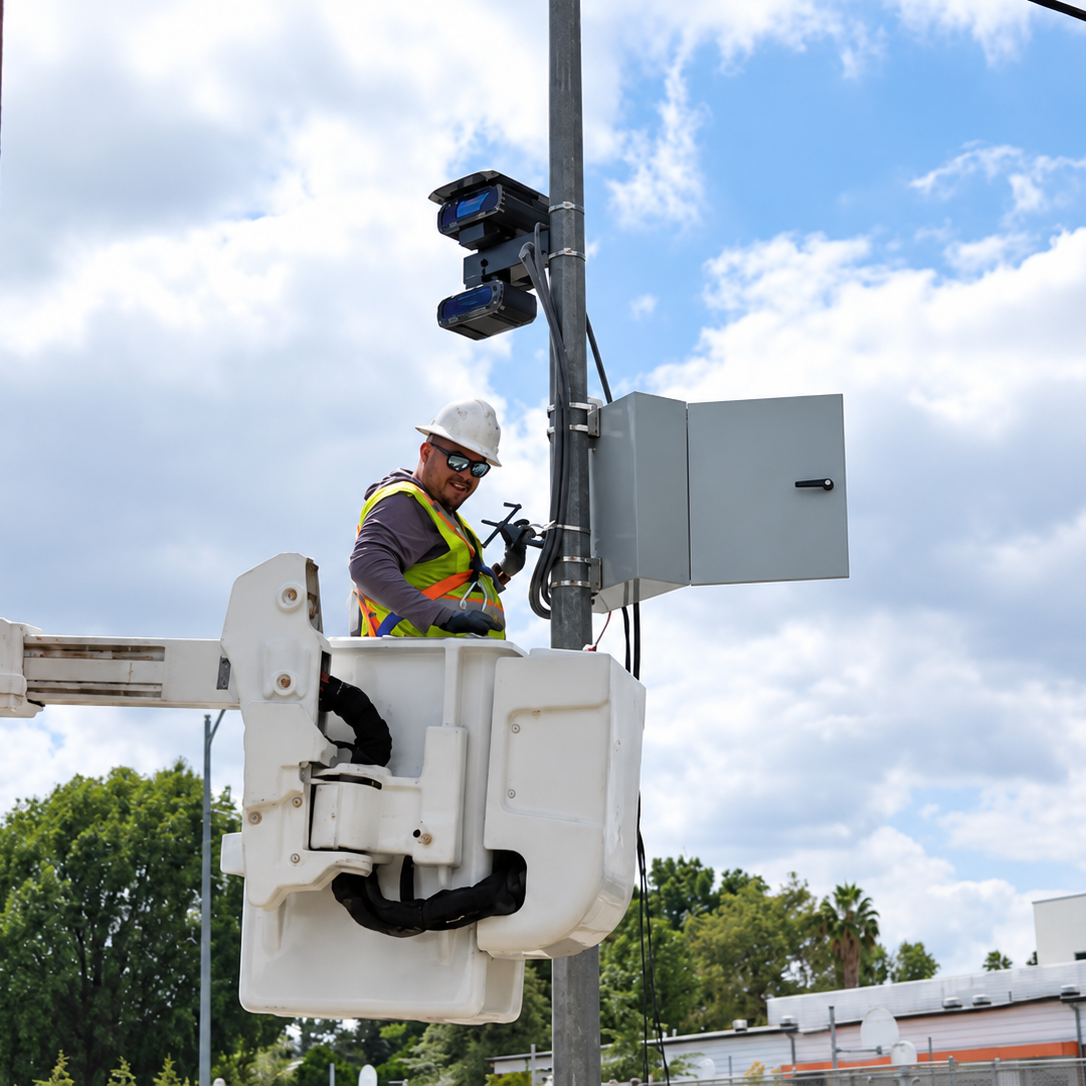
Photo DOT
Los Angeles will begin activating its first automated Speed Safety Systems on Monday, October 26, as part of a citywide pilot program aimed at reducing dangerous speeding and serious traffic collisions.
The Los Angeles Department of Transportation says the cameras will detect vehicles traveling at least 11 miles per hour over the posted speed limit. When a possible violation is detected, the system captures the license-plate information needed for enforcement and sends the information to LADOT for review.
According to the City, the cameras are designed specifically for speed enforcement and do not capture drivers’ faces.
Each camera location will begin with a 60-day warning period. During that period, motorists who trigger the system will receive a written warning and information about the program rather than a citation. Citations will begin only after the warning period for that particular location has expired.
The program is authorized under California’s AB 645 pilot law. Los Angeles plans to install 125 speed-camera systems at locations selected because of histories of serious crashes, dangerous speeding, or proximity to schools and senior facilities.
LADOT says speeding remains a major contributor to serious and fatal crashes in Los Angeles. The department reports that approximately one in five fatal crashes in the city in 2024 was directly attributed to speeding.
The first systems are scheduled to activate October 26, and LADOT says it anticipates that all systems in the pilot will be activated by the end of 2026.
Speed Cameras vs. License-Plate Readers
Although both systems can photograph a vehicle’s license plate, Los Angeles’ new speed cameras are separate from the LAPD automatic license-plate reader program currently under City Council review.
The LADOT Speed Safety Systems are designed for a specific purpose: determining whether a vehicle exceeded the posted speed limit by at least 11 mph and processing that violation.
LAPD’s proposed Axon automatic license-plate reader pilot, by contrast, involves technology designed to identify and create searchable records of vehicles observed at particular locations. That proposal has prompted separate City Council scrutiny over privacy, data retention, access and oversight.
The distinction matters: not every camera system collects, retains or uses information in the same way.
Hollywoodland itself is not on the current camera list, but several locations are nearby. In Council District 4, systems are planned along Western Avenue between Franklin Avenue and Los Feliz Boulevard, Highland Avenue between Franklin Place and Camrose Drive, Hollywood Boulevard between Camino Palmero and Vista Street and Franklin Avenue between Tamarind and Cheremoya Avenue. LA Department of Transportation
LA Department of Transportation
View LADOT’s camera map, complete location list and program information